
Transforming Bill Split Into a Seamless Daily Flow
The Problem
Bill splitting is a frustrating mix of social pressure and scattered tools. Users often feel uncomfortable reminding others to pay, and they rely on multiple apps, group chats, and manual calculations just to manage simple shared expenses.
The Result
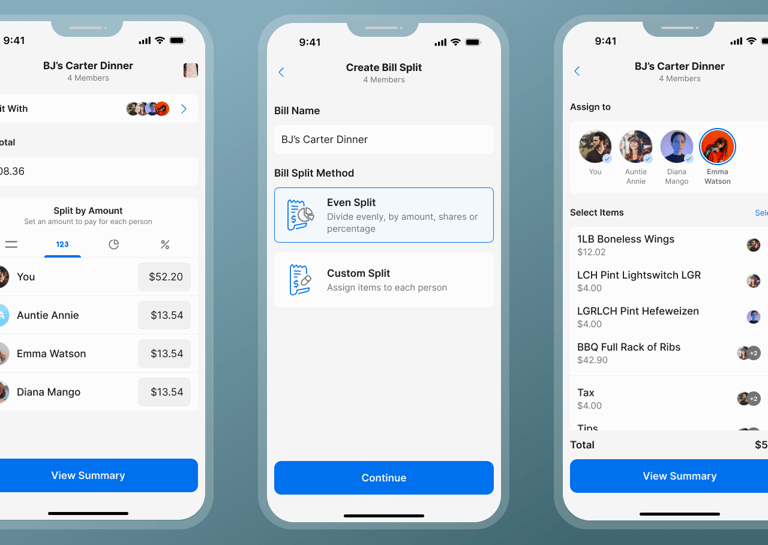
Create a unified bill splitting flow that simplifies calculation, tracking, and reminders. This keeps users inside the app for their shared expenses, increasing recurring engagement and driving more cash movement within the VAMA wallet.
THE BACKGROUND
What led us here
Research made it evident that bill splitting is a recurring issue for users, making it an important addition to our long-term product vision.
Key Users Pain Point
Users feel awkward and uncomfortable reminding others to pay.
Shared expenses require multiple apps, creating a messy and fragmented workflow.
Amounts and responsibilities are often unclear, causing confusion and delays.
Recurring payments like rent and utilities require repeated coordination every month.
There is no single place to track who has paid and who still owes money.
How Might We...
How might we reduce the social discomfort users feel when asking others to pay?
How might we streamline shared expenses into one clear and consistent flow?
How might we make bill splitting easy to understand without manual calculations?
How might we provide visibility on who has paid and who still owes?
Why We Need to Fix This
During our MVP interviews, users repeatedly brought up bill splitting as one of their biggest daily frustrations. This consistency in feedback made it clear that the problem was not only widespread but deeply tied to real financial interactions that happen within chat. Even though it was outside the initial MVP scope, the strength of this insight showed us that addressing bill splitting aligns naturally with our product vision and supports how users already want to manage money together.


THE SOLUTION
Aligning the Solution
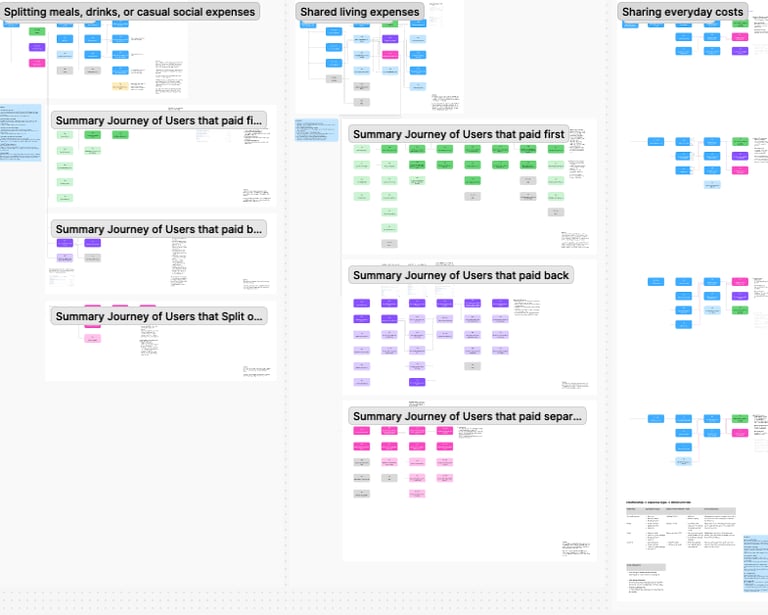
We aligned on a streamlined bill splitting flow by connecting user pain points with our How Might We exploration. This helped us focus on reducing manual effort and social discomfort through one clear experience.
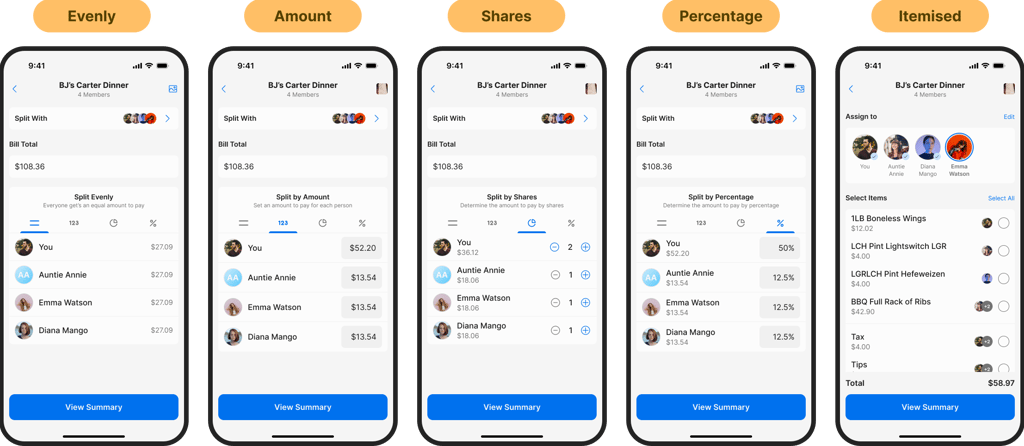
Thinking Process
We explored multiple variations of the bill splitting experience, including concepts that incorporated AI to automate expense detection and summarization. While these ideas showed strong potential, we decided to prioritise a simpler direction for now due to technical feasibility and the maturity required for reliable AI behaviour. This exploration helped us refine what was possible for the current stage while keeping more advanced ideas in our long-term roadmap.
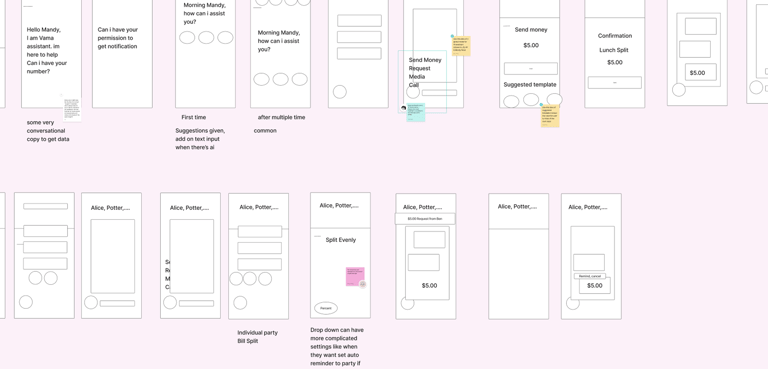
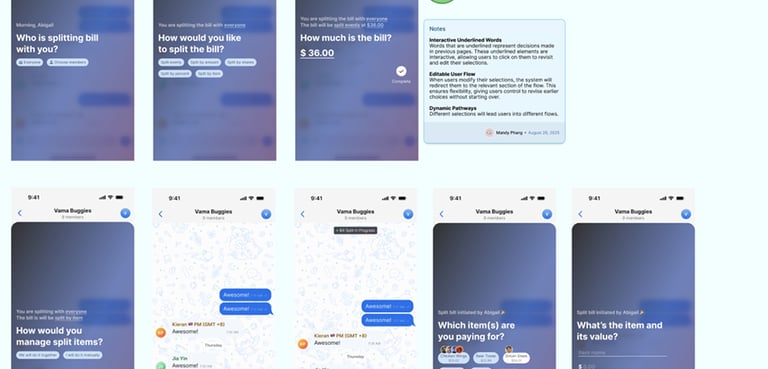
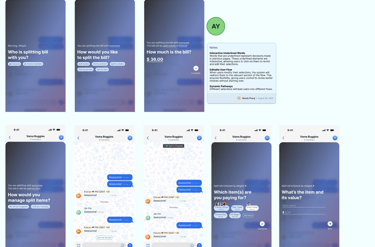

Key Features
One place for all shared expenses
Users can create, view, and manage bill splits without switching between apps.
Clear breakdown of who owes what
Automatic calculations reduce confusion and remove the need for manual math.
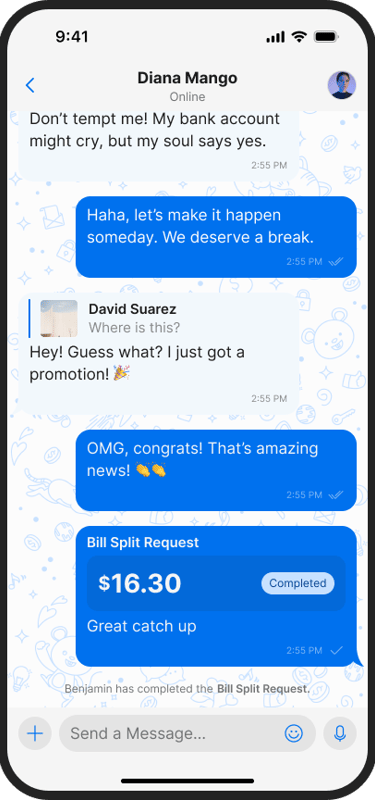
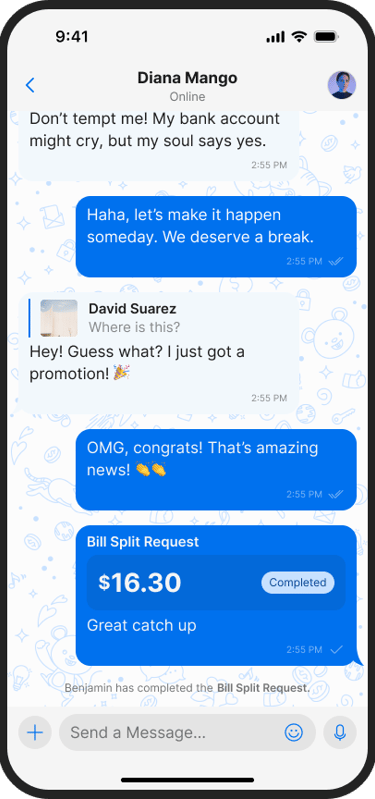
Built-in reminders inside chat
Gentle prompts remove the social pressure of asking others to pay back.
Real-time tracking
Users can see who has paid and who still owes, improving transparency within groups.
Final Direction
After exploring multiple approaches, we aligned on a simple and unified bill splitting flow that fits naturally within chat and focuses on reducing manual effort and social discomfort. This direction provided the strongest balance between user value and current technical feasibility while keeping space for future enhancements like AI automation.
Success Tracker
To evaluate whether bill splitting delivers real user value and supports wallet growth, we identified key metrics and target ranges:
Adoption of Bill Splitting
Aim for 20–30% of active users to initiate at least one bill split within the first 3 months.
Completion Rate of Splits
Target an 80–90% completion rate, indicating clarity and reduced friction for all participants.
Reduction in Manual Follow Ups
Track a 40–50% decrease in users manually reminding others, showing that automated reminders are effective.
Engagement Inside the Wallet
Increase transaction volume by 15–25% driven by bill splitting activities.
Return Usage
Aim for 50–60% of first-time bill splitters to use the feature again within the same month, signalling habit formation.
Time to Complete a Split
Reduce the average time from creation to full settlement to under 48 hours, reflecting a smooth and intuitive experience.